Babies, heat, and water.
What parents need to know about hydration for babies under 1 year — especially when it is hot outside.
6-12 months: small sips
Heat red flags

flat fee
text-based visit
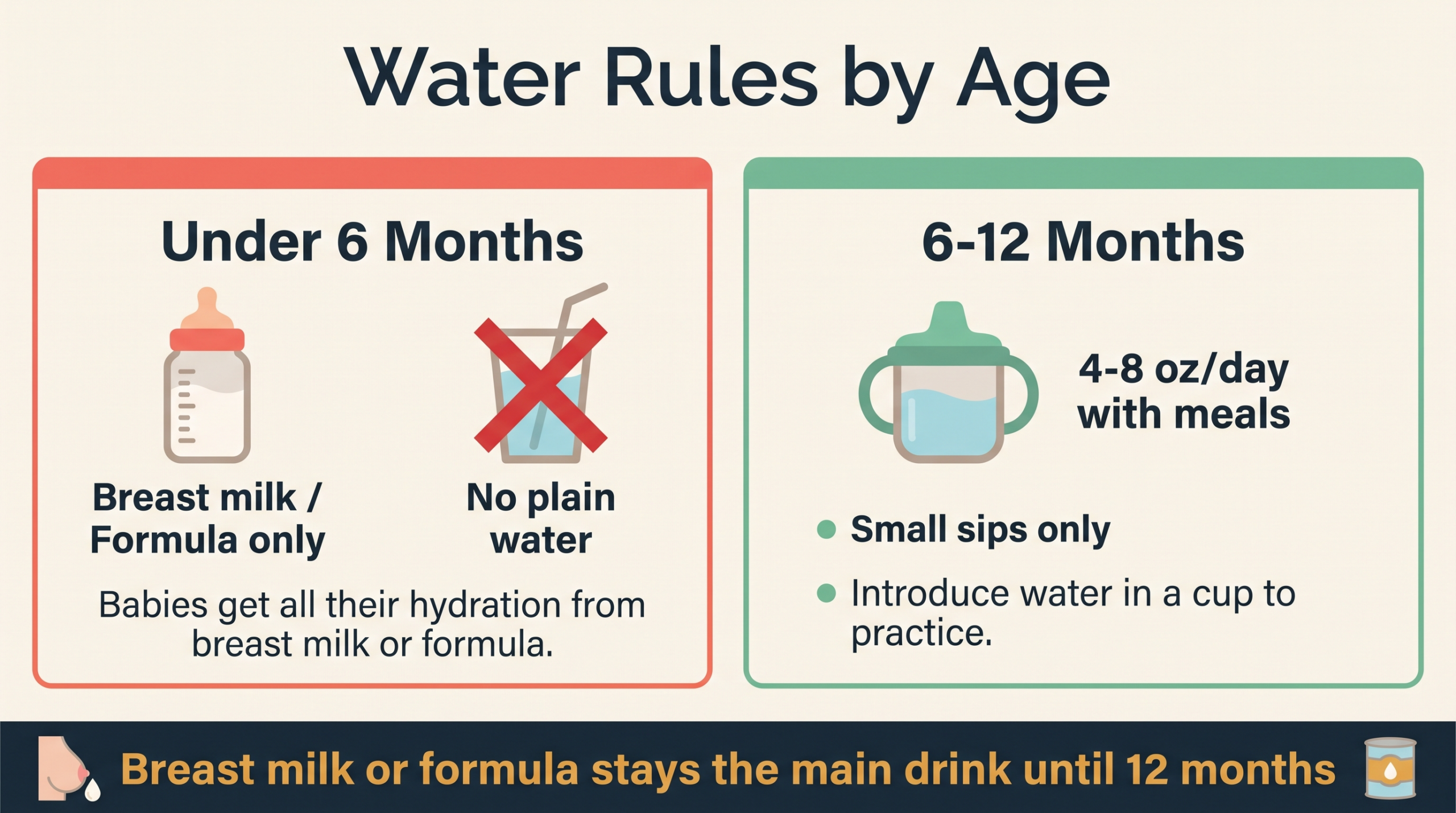
Babies under 6 months should get only breast milk or properly mixed infant formula, even when it is hot outside. They do not need plain water.
Once a baby is around 6 months old and starting solids, small sips of water with meals are fine. Think practice sips from a cup, not a bottle of water replacing milk.
If heat is the issue, the move is more frequent feeds, cooler surroundings, lighter clothing, shade, and watching closely for dehydration or overheating.
Why babies under 6 months should not get plain water
Here is the deal: a young baby’s stomach is tiny, and breast milk or formula is doing two jobs at once. It hydrates them and feeds them. If you add plain water, you are not adding useful nutrition. You may be taking up room that should have gone to calories, protein, fat, sodium, and the rest of what babies need to grow.
That is one reason water can backfire. A few ounces may not sound like much to an adult, but to a baby it can matter. If water fills them up, they may take less breast milk or formula. Less milk means fewer calories and fewer nutrients.
The other issue is more serious: too much water can dilute sodium in the blood. That is called hyponatremia. In babies, low sodium can cause unusual sleepiness, lethargy, irritability, seizures, and in severe cases can become life-threatening. That is why “just a little water because it is hot” is not the safe workaround people think it is.
Hot day rule for under 6 months
Do not switch to water. Offer breast milk or properly mixed formula more often. Current AAP heat guidance says infants can be offered additional breast milk or additional formula on hot days, but they should not be given water in the first 6 months of life.
And please do not stretch formula with extra water. Follow the mixing directions exactly. Over-diluted formula can cause the same sodium problem and also underfeeds the baby.
Babies 6-12 months: small sips are OK
Around 6 months, most babies are beginning solids and learning cup skills. That is when small amounts of water can be introduced. The CDC and AAP both point to about 4-8 ounces per day for babies 6-12 months.
The key word is small. A few sips from an open cup, straw cup, or sippy cup with meals is reasonable. Water should not replace regular breast milk or formula feeds. Those are still the primary source of nutrition and hydration through the first birthday.
Also, skip the sweet stuff. No juice before 12 months. No sweetened drinks. No cow’s milk as a drink before 12 months. After 12 months, if a family offers juice at all, keep it to 100% juice and no more than 4 ounces a day for toddlers.
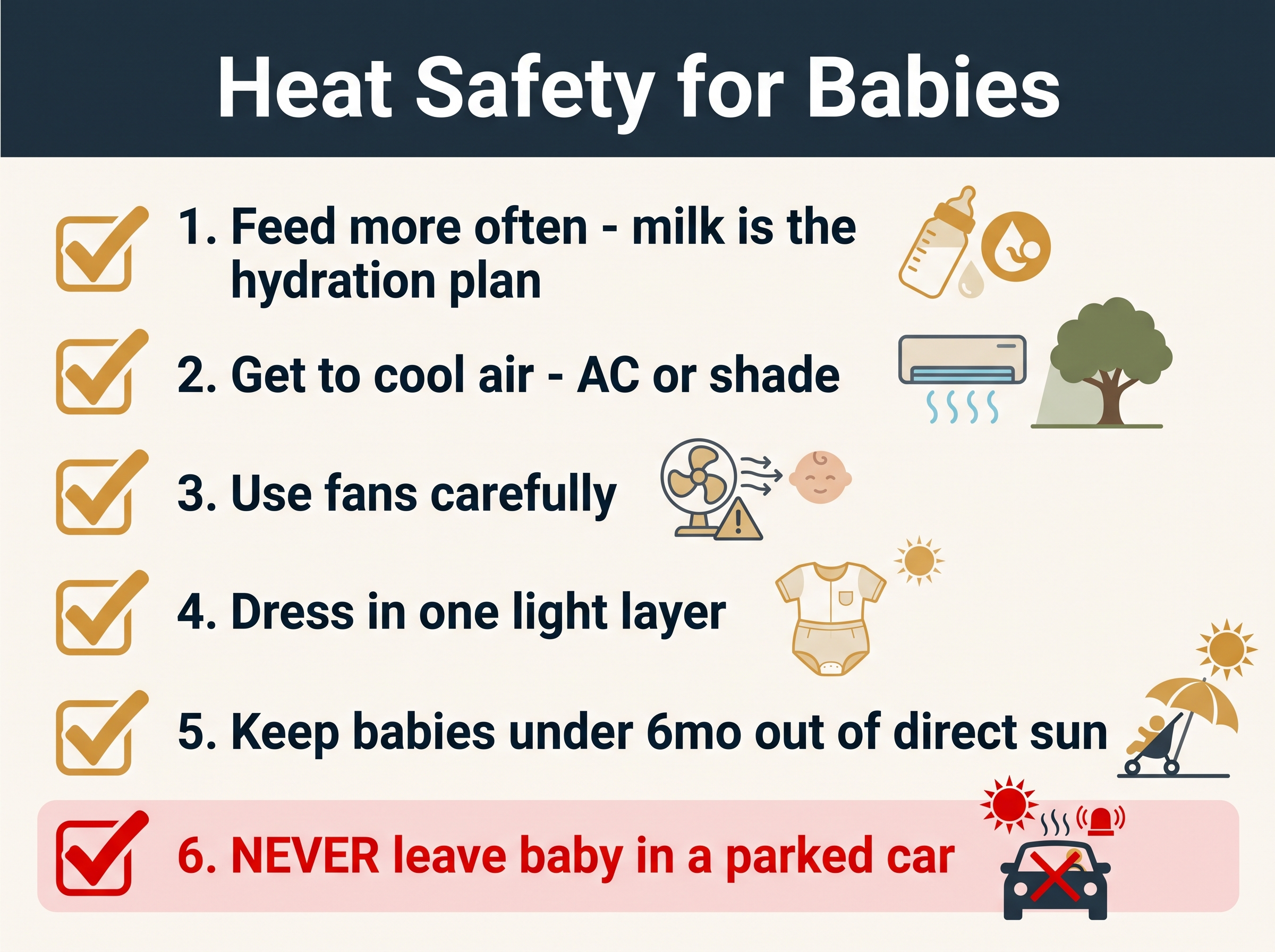
- Feed more often. Breast milk or formula is the hydration plan for younger babies. For 6-12 months, small water sips can be added with meals, but milk feeds still matter most.
- Get cool air. Air conditioning, a shaded indoor space, or a cooling center beats trying to tough it out in a hot room.
- Use fans carefully. Fans can help move air, but do not point hot, dry air straight at a baby in an overheated room.
- Dress lightly. A single loose, lightweight layer is usually enough. Overbundling traps heat.
- Keep direct sun off babies. Babies under 6 months should be kept out of direct sunlight when possible. Use shade, stroller canopies, hats, and light protective clothing.
- Never leave a baby in a parked car. Not for one minute. Cars heat quickly even with windows cracked.
Warning signs parents should not ignore
Babies cannot tell you they feel overheated or dehydrated, so you have to watch the pattern. The big things I want parents watching for are fewer wet diapers than usual, no tears when crying, dry mouth or lips, unusual fussiness, unusual sleepiness, skin that feels hot to the touch, flushed or red skin, poor feeding, vomiting, fever, or breathing that seems faster or harder than normal.
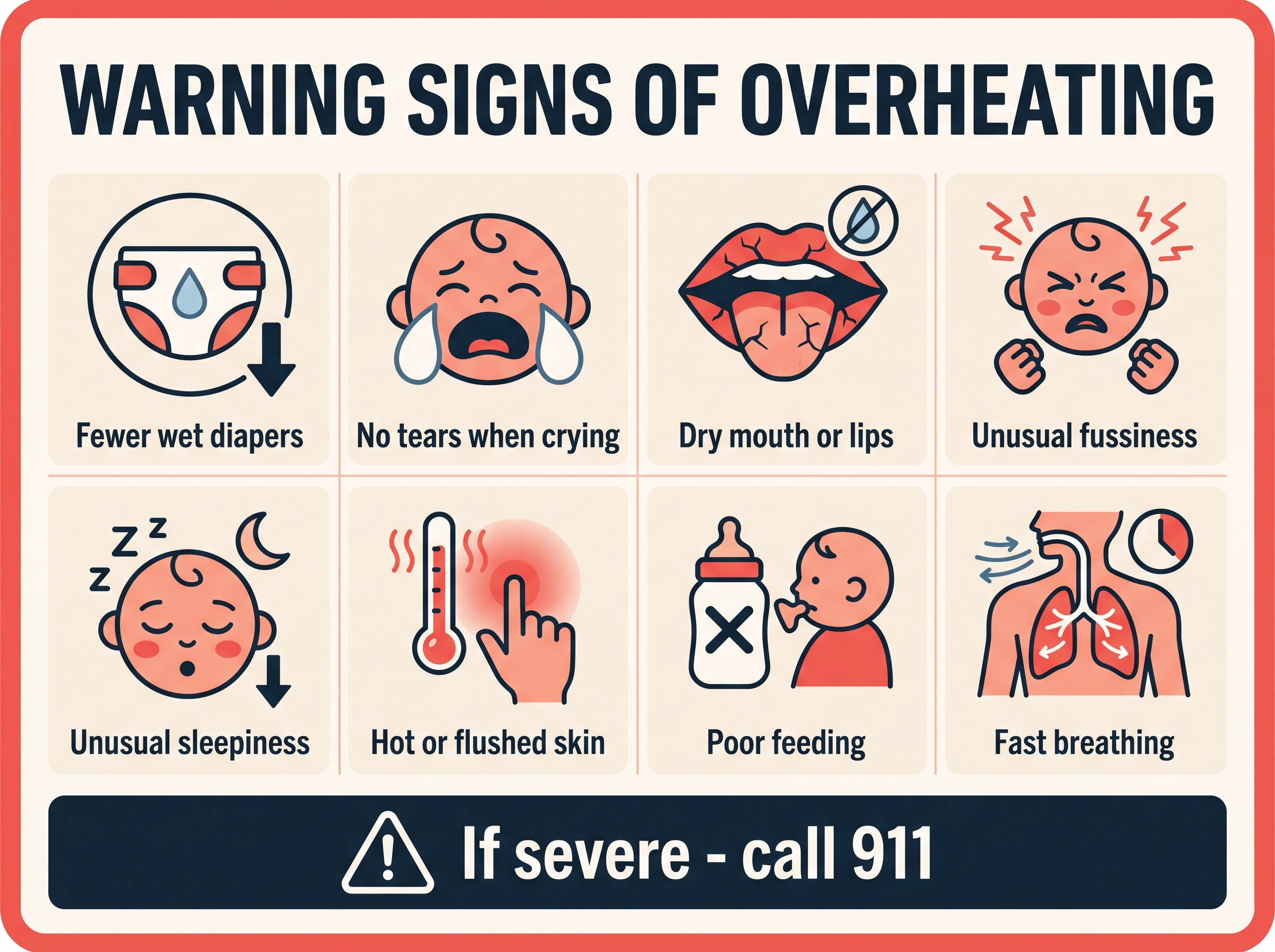
If your baby seems very lethargic, is not feeding well, has signs of dehydration, has a fever, or symptoms are not improving quickly after getting into a cool environment, seek care right away. For severe symptoms, trouble breathing, seizure, confusion, hard-to-arouse sleepiness, or concern for heat stroke, call 911 or go to emergency care.
For babies 6 months and up, I can help sort out non-emergency concerns by text.
NPCWoods is a $59 flat fee, text-based visit with a real NP, available in AZ, CO, GA, ID, IA, MT, NV, NM, NC, OR, and UT. If the story sounds like dehydration, heat illness, fever in a younger baby, or anything that needs hands-on evaluation, I will tell you plainly to get in-person care.
Key takeaway
Under 6 months: breast milk or properly mixed formula only. No plain water, even when it is hot.
6-12 months: small sips of water with meals are fine, generally around 4-8 ounces per day. Breast milk or formula remains the main drink.
In the heat: feed more often, keep babies cool, stay out of direct sun, never leave a child in a car, and act quickly if dehydration or overheating signs show up.
When in doubt, call your child’s clinician. Parent instinct matters. If something feels off, do not wait around trying to solve it with water.
Special thanks to Ami Wilson for suggesting this blog topic.