Clinically reviewed by Chris Woods, MSN, APRN, FNP-C
This article reflects Chris’s real clinical experience treating common urgent-care conditions through NPCWoods Telemedicine. Content is reviewed for accuracy, updated over time, and paired with clear guidance on when text-based care is appropriate and when in-person care matters more.
Licensed Nurse Practitioner. Licensed in AZ, CO, GA, ID, IA, MT, NV, NM, NC, OR, UT. NPI 1285125468.
Published June 24, 2026. Last reviewed and updated June 24, 2026.
You text Chris directly. No AI triage, no call center, and no copy-paste handoff between strangers.
This article is educational only. For chest pain, trouble breathing, severe dehydration, confusion, or other emergencies, call 911 or seek urgent in-person care.


|
Chris Woods, MSN, APRN, FNP-C, ACNP-BC Licensed Nurse Practitioner · Double board-certified · Verify on NPI Registry |
Real talk — that clogged, achy ear after a day in the pool usually isn’t wax.
It’s swimmer’s ear. Trapped water irritates the canal and bacteria move in. Tugging your earlobe hurts? That’s the tell. Itching, fullness, muffled hearing, and sometimes drainage follow.
Quick Answer
Most cases are straightforward and respond quickly to prescription ear drops. A text visit is often enough to get the right treatment started the same day. The key is knowing when it’s simple vs. when you need hands-on care.
What’s actually going on
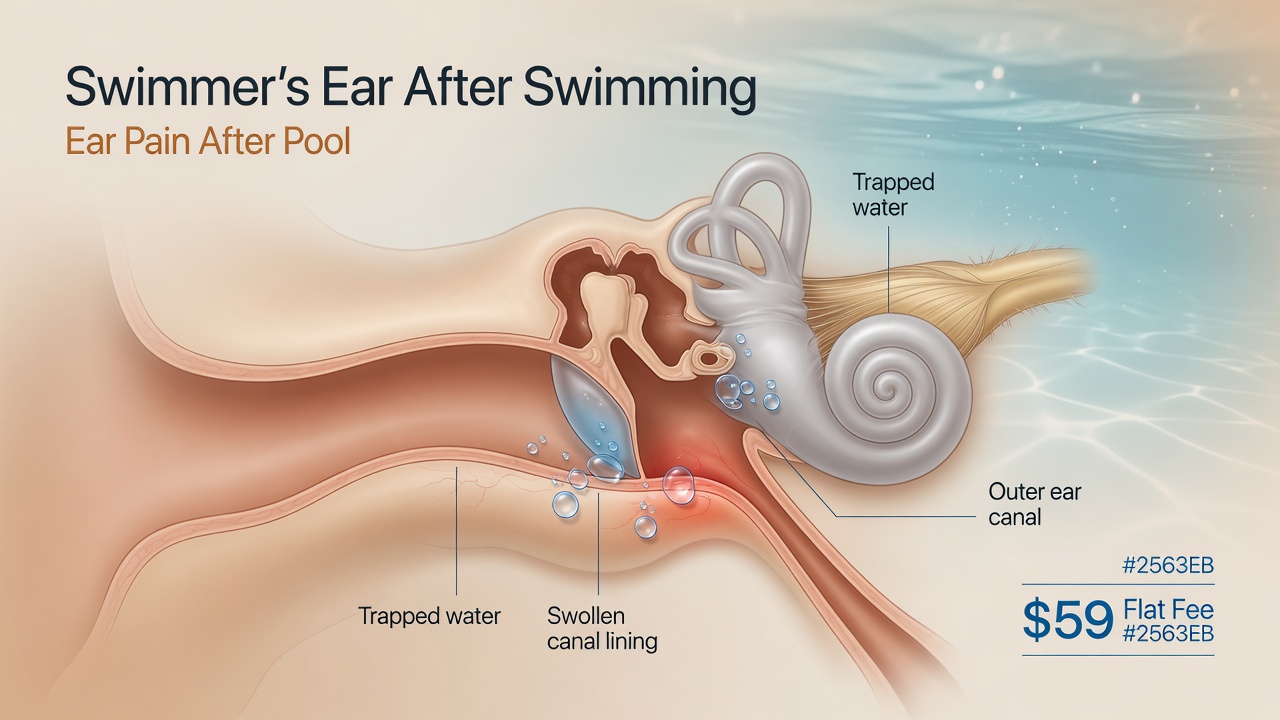
The outer ear canal is a warm, moist tunnel. After swimming or showering, water gets trapped. Bacteria (often Pseudomonas) or fungi love that environment and set up shop. The lining swells and gets inflamed — that’s the pain, itch, and pressure.
It’s not a middle-ear infection. It’s the canal itself. Most cases are straightforward when caught early.
Common signs
- Pain when tugging your earlobe or pressing the outer ear
- Itching inside the ear + a feeling of fullness or blockage
- Mild redness, swelling, or thin discharge
- Muffled hearing
What most people try first (and what backfires)
Cotton swabs or fingers to “dry it out” push debris deeper and scratch the lining. Home oils or hydrogen peroxide without guidance can irritate more. Waiting it out while it worsens or sitting in urgent care for hours often ends up with the same topical drops.
What actually fixes it
Keep it completely dry. No more swimming or getting water in the ear. Gently towel the outer ear and tilt your head after any exposure.
The right drops. Prescription ear drops (antibiotic + steroid combinations like ofloxacin or ciprofloxacin/hydrocortisone). These fight the infection and reduce inflammation fast. Pain relief with ibuprofen or acetaminophen helps in the meantime.
Most people feel significantly better within 24–48 hours of starting the correct drops. Full resolution usually takes 7–10 days.
Prevention that works
Dry ears thoroughly after water. Many people prone to this use a doctor-approved drying drop (isopropyl alcohol + white vinegar mix or commercial equivalent) right after swimming. Skip the cotton swabs entirely.
How a $59 text visit handles swimmer’s ear
You describe the timing (after swimming?), the key sign (tugging hurts?), itch level, discharge, fever or not. A photo of the outer ear can help. I review it the same way I would for an uncomplicated case.
If it fits, the correct drops go straight to your pharmacy. Most people start relief the same day without a waiting room.
Red flags — get in-person or ER care
- Fever, severe swelling, or pain spreading outside the ear
- Significant hearing loss, dizziness, or facial weakness
- Symptoms rapidly worsening or no improvement after 48 hours of drops
- Diabetes or weakened immune system
Ear still bothering you?
Get the right drops today.
$59 flat-fee text visit. Real NP review. Prescription to your pharmacy when appropriate.
This is educational and does not replace clinical evaluation. Sources: CDC Healthy Swimming, Mayo Clinic, AAO-HNS guidelines on acute otitis externa.